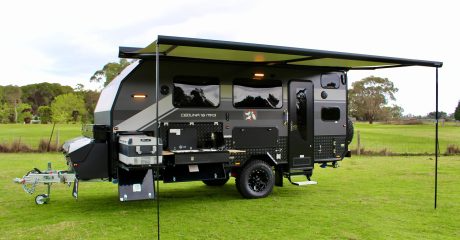
Designed for duo travellers (Or solo adventurers), the Airlie 11 HR Twin is the perfect compact off-road caravan for those seeking comfort and versatility.
The Airlie 18R is built for those who crave adventure without compromise, featuring an innovative rear-door design that enhances flow, space, and accessibility.
The Airlie 20R is a feature-packed off-road caravan, designed for luxury on the go. Inside, enjoy a modern kitchen, an abundance of storage, and a built-in washing machine for added convenience.
The Airlie 23 is designed for families who crave adventure without sacrificing luxury. Featuring four spacious bunks, a plush island bed, and endless storage.
The Parkes 14R Twin MK4 proves you don’t need extra length to travel without limits. Built for duo-travellers who want genuine off-road capability paired with modern comfort, this hybrid is engineered to go further with confidence.
The Parkes 15FRS Club redefines what compact touring can feel like. With both a fridge and microwave, it delivers practical convenience without compromising space.
Built for travellers who demand more, this van pairs massive 1190W solar capacity with a huge 12kWh lithium bank and full smart-system integration throughout.
The Parkes 16R Quad MK4 delivers serious off-road capability with the flexibility modern families need. Up front, a king bed easily folds away to create additional seating, while two bunks ensure everyone has their own space to recharge. An internal ensuite brings everyday convenience on the road, and the electric pop-top roof makes setup effortless — just press a button and relax.
Designed for couples who want serious off-road capability without the setup hassle, the Parkes 16R Twin MK4 makes adventure feel effortless. The permanent king bed means no unpacking — simply press a button, raise the electric roof and relax.
Finished with extensive external storage and a rear utility box, the Parkes 16R 3 Bunk is designed for families who want space, strength and freedom wherever the road leads.
The Ceduna 13R Twin MK4 is built for duo-travellers who want to go further without towing bigger. This agile hybrid blends genuine off-road capability with modern, homely comfort — proving compact doesn’t mean compromise. Powered by a 24V Victron system, you’ll have smart, reliable energy wherever adventure calls.
The Ceduna 15FRS Club MK4 is designed for travellers who want room to breathe without sacrificing capability. The rear club lounge creates a genuine living zone — more space to relax, dine and stretch out in comfort.
Built for adventurous families, the Ceduna 16R 3 Bunk MK4 combines serious off-road capability with the power, storage and comfort needed to make more of every journey.
The Ceduna 17F Twin MK4 is designed for travellers who want space, style and serious cooking capability on the road. Its open floor plan creates a light, spacious feel, centred around a true monster kitchen made for extended touring. Outside, the innovative parallel slide-out kitchen and external pantry offer added protection from the elements while expanding your prep space.
The Ceduna 17F Quad MK4 is designed to give families the space they need without compromising capability. A generous open-plan layout creates an airy, expansive feel, anchored by a true monster kitchen built for extended touring and serious meal prep. Outdoors, the parallel slide-out kitchen and external pantry enhance functionality while offering greater protection from the elements.
The VZ4800 HR Twin blends refined comfort with rugged off-road performance, delivering a touring experience that feels effortless from setup to sundown.
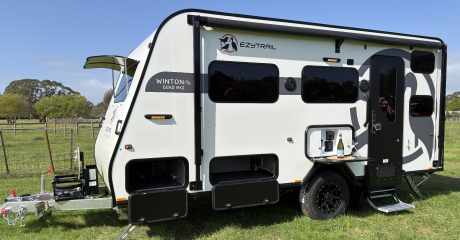
Ezytrail’s Winton 10 just levelled up. The all-new MK2 brings your favourite compact caravan to the next stage of comfort, convenience, and cutting-edge tech.
The Winton 13 MK2 is Ezytrail’s latest evolution in compact caravanning — a smart, spacious, and fully loaded 13ft van built for couples who want big features without the bulk.
The Winton 16F Twin combines modern comfort and smart technology in a streamlined 16ft layout, featuring a queen island bed, self-contained ensuite, café lounge with sofa bed and spacious kitchen.
Caravan Emergency Essentials: What Every Australian Traveller Should Carry
Having the right caravan emergency essentials helps you deal with common issues safely and get back on the road sooner. This guide covers practical caravan recovery and safety equipment, plus other items worth keeping in your caravan or tow vehicle before you set off.
Ezy TipsCaravan Essentials
A caravan adventure takes you from busy highways to quiet campsites, beaches, bush tracks and remote parts of Australia. But when you are travelling through remote areas, a small problem can become a much bigger one if you are not prepared. A flat tyre, dead battery, minor injury or unexpected weather can change your plans quickly.
That’s why it’s worth planning your caravan emergency essentials before you leave home. Do not fill every storage compartment with equipment you may never use. Instead, focus on practical items that can help you stay safe, handle common problems, and get help when you need it.
Here are some of the essentials worth considering:
1. Carry the Right Caravan Recovery Equipment
If you are travelling beyond sealed roads, recovery gear should be high on your checklist. Include rated recovery straps, shackles, traction boards, and suitable gloves in your caravan recovery equipment list. A portable air compressor can also help you check and adjust tyre pressures when travelling on different surfaces.
However, recovery equipment must suit the vehicle and caravan being recovered. Use only manufacturer-approved, correctly rated recovery points and methods. Never attach recovery equipment to a towball, tie-down point or unrated point. Dynamic or snatch recovery can cause serious injury: keep bystanders well clear, and use professional recovery services if you are not trained. The presence of a recovery point does not establish which technique is permitted. Recovery points, jack-locating points and other chassis features vary by Ezytrail model, so check the specifiec model documentation before travel.
2. Do Not Forget a Spare Wheel and Tyre Gear
A damaged tyre can be inconvenient at home. It can be a much bigger problem when you are kilometres from the nearest town. Carry a suitable spare wheel and make sure you know how to change a tyre safely. A jack, wheel brace, tyre pressure gauge and basic tyre repair equipment can also be useful.
Before leaving, check your tyres for visible damage and make sure they are inflated according to the manufacturer’s recommendations. Many Ezytrail caravans include a spare wheel as part of their specifications, while some models also provide dedicated jacking points to make positioning a jack easier.
3. Pack Essential Caravan Safety Equipment
Your caravan safety equipment should cover fiere, electrical, and towing safety separately from recovery equipment. Depending on your travel plans and vehicle setup, consider items such as:
Fire extinguisher
Smoke alarm
Torch or headlamp
Spare batteries
Reflective warning gear
Emergency contact information
Gloves and basic protective equipment
A tyre pressure gauge and suitable air compressor can be useful for off-road travel. Never use recovery equipment simply because you have it. Follow the vehicle, caravan and equipment manufacturers’ instructions, use correctly rated equipment and choose professional recovery when the method or conditions are uncertain.
4. Keep a Well-Stocked Camping Emergency Kit
Keep your camping emergency kit somewhere you can access quickly, not buried under camping chairs, tables and other equipment. Consider keeping a separate, easy-to-reach bag containing:
First aid supplies
Torch or headlamp
Spare batteries
Portable power bank
Drinking water
Basic food supplies
Emergency blanket
Waterproof matches or lighter
Whistle
Work gloves
Multi-purpose tool
The exact contents will depend on where you are travelling and how long you plan to stay away. It is also worth carrying extra water when travelling in remote areas. The key is knowing where everything is before you need it.
5. Keep Extra Water and Essential Supplies
If something goes wrong, you may need to stay longer than expected. Carrying enough drinking water for your planned trip, plus some additional supply where practical, gives you a useful buffer. It is also worth carrying non-perishable food you can use if you are delayed.
For longer or more remote trips, think about the conditions you may face and what you would need if you could not reach a shop or service station immediately. Power problems can become particularly inconvenient when you are camping away from mains electricity.
A reliable torch or headlamp should be one of the first things you pack. Spare batteries or a rechargeable backup light are also useful. Your phone can be an important communication tool in an emergency, but it should not be your only option. For remote travel, consider a registered personal locator beacon, satellite messenger or satellite phone, and leave a trip plan and expected check-in times with a trusted person.
6. Know Your Caravan’s Safety Systems
Emergency preparation is not only about carrying equipment. You also need to understand the equipment already fitted to your caravan. Before your first trip, familiarise yourself with the location and operation of important systems such as the fire extinguisher, smoke alarm, emergency brake or breakaway system, gas isolation, and electrical systems.
At Ezytrail, we highlight the importance of understanding fiere and electrical safety, including keeping the fiere extinguisher accessible and ensuring it works. Smoke-alarm, fiere-equipment and registration requirements can vary by jurisdiction, so check the current local rules. If you are unsure about any system, ask a qualifieed professional or your caravan dealer rather than guessing.
A Simple Emergency Check Before You Leave
A quick check before departure is much easier than discovering that something is missing when you are already hundreds of kilometres from home. Do not forget to check the weather, planned route, and access conditions before heading into remote areas. The best emergency kit is one you have checked before the trip.
Emergency equipment also consumes payload. Check the travel-ready vehicle and caravan masses against GVM, GCM, axle, ATM, GTM, tyre, towbar and coupling limits.
Before departure, take a few minutes to inspect:
Tyres and wheels: Check condition, load rating, pressure, spare tyre and wheel-nut torque.
Recovery Gear: Make sure straps, shackles and other equipment are suitable and undamaged.
Safety Equipment: Check your fire extinguisher, smoke alarm and first aid supplies.
Towing connections: Check the coupling, safety chains, electrical plug, lights, caravan brakes and breakaway system and battery.
Supplies: Pack enough water, food and basic first aid supplies.
Tools: Confirm that your jack, wheel brace and basic tools are accessible.
Visibility and communication: Check tow mirrors and number-plate visibility, charge your phone and prepare remote communications and a trip plan where needed.
Prepare for Your Next Caravan Adventure
You cannot predict every problem that may happen on a caravan adventure. What you can do is prepare for the situations you are most likely to encounter. The best caravan emergency essentials are the ones you understand, can reach quickly, and know how to use. It gives you more confidence when travelling, particularly when your plans take you away from major towns and services.
Your caravan itself also plays an important part in emergency preparation. Carrying suitable safety equipment, recovery gear, fierst aid supplies, tools, food and water, and knowing how to use them, helps you handle unexpected situations with more confidence.
Before your next trip, review your Ezytrail model specifications to check the equipment and current local rules, and seek professional help for any recovery or repair beyond your training.
Online caravan sales across Australia make it easier to compare models, layouts, and prices. This guide explains what to look for when buying a caravan online in Australia and how to proceed with confidence.
Discover the various caravan finance options available before you decide to buy a caravan in Australia. Learn how to work out what you can comfortably afford.
Australian roads and weather are unpredictable. Learn about caravan features that matter most, including off-road capability, weather resistance, power systems, storage, and size.
Get in touch to book a viewing at your nearest Ezytrail showroom. One of our friendly team members will reach out to you directly to organise the best time for you to stop by!
 Touring Range