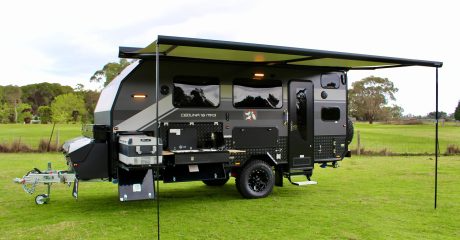
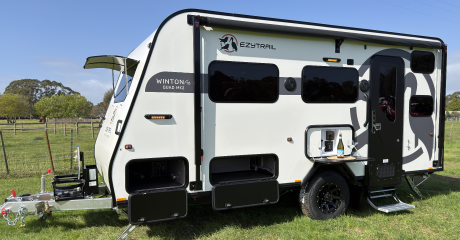
Designed for duo travellers (Or solo adventurers), the Airlie 11 HR Twin is the perfect compact off-road caravan for those seeking comfort and versatility.
The Airlie 18R is built for those who crave adventure without compromise, featuring an innovative rear-door design that enhances flow, space, and accessibility.
The Airlie 20R is a feature-packed off-road caravan, designed for luxury on the go. Inside, enjoy a modern kitchen, an abundance of storage, and a built-in washing machine for added convenience.
The Airlie 23 is designed for families who crave adventure without sacrificing luxury. Featuring four spacious bunks, a plush island bed, and endless storage.
The Parkes 14R Twin MK4 proves you don’t need extra length to travel without limits. Built for duo-travellers who want genuine off-road capability paired with modern comfort, this hybrid is engineered to go further with confidence.
The Parkes 15FRS Club redefines what compact touring can feel like. With both a fridge and microwave, it delivers practical convenience without compromising space.
Built for travellers who demand more, this van pairs massive 1190W solar capacity with a huge 12kWh lithium bank and full smart-system integration throughout.
The Parkes 16R Quad MK4 delivers serious off-road capability with the flexibility modern families need. Up front, a king bed easily folds away to create additional seating, while two bunks ensure everyone has their own space to recharge. An internal ensuite brings everyday convenience on the road, and the electric pop-top roof makes setup effortless — just press a button and relax.
Designed for couples who want serious off-road capability without the setup hassle, the Parkes 16R Twin MK4 makes adventure feel effortless. The permanent king bed means no unpacking — simply press a button, raise the electric roof and relax.
Finished with extensive external storage and a rear utility box, the Parkes 16R 3 Bunk is designed for families who want space, strength and freedom wherever the road leads.
The Ceduna 13R Twin MK4 is built for duo-travellers who want to go further without towing bigger. This agile hybrid blends genuine off-road capability with modern, homely comfort — proving compact doesn’t mean compromise. Powered by a 24V Victron system, you’ll have smart, reliable energy wherever adventure calls.
The Ceduna 15FRS Club MK4 is designed for travellers who want room to breathe without sacrificing capability. The rear club lounge creates a genuine living zone — more space to relax, dine and stretch out in comfort.
Built for adventurous families, the Ceduna 16R 3 Bunk MK4 combines serious off-road capability with the power, storage and comfort needed to make more of every journey.
The Ceduna 17F Twin MK4 is designed for travellers who want space, style and serious cooking capability on the road. Its open floor plan creates a light, spacious feel, centred around a true monster kitchen made for extended touring. Outside, the innovative parallel slide-out kitchen and external pantry offer added protection from the elements while expanding your prep space.
The Ceduna 17F Quad MK4 is designed to give families the space they need without compromising capability. A generous open-plan layout creates an airy, expansive feel, anchored by a true monster kitchen built for extended touring and serious meal prep. Outdoors, the parallel slide-out kitchen and external pantry enhance functionality while offering greater protection from the elements.
The VZ4800 HR Twin blends refined comfort with rugged off-road performance, delivering a touring experience that feels effortless from setup to sundown.
Ezytrail’s Winton 10 just levelled up. The all-new MK2 brings your favourite compact caravan to the next stage of comfort, convenience, and cutting-edge tech.
The Winton 13 MK2 is Ezytrail’s latest evolution in compact caravanning — a smart, spacious, and fully loaded 13ft van built for couples who want big features without the bulk.
from $59,990$54,990+ Dealer Delivery & On Road Costs.
or $192 a week
The Winton 16F Twin combines modern comfort and smart technology in a streamlined 16ft layout, featuring a queen island bed, self-contained ensuite, café lounge with sofa bed and spacious kitchen.
Remote Caravan Travel Preparation: Power, Water and Recovery Essentials
Remote caravan trips offer the freedom to explore Australia’s quieter destinations, but preparation is essential when services are far away. This guide focuses on remote caravan travel preparation: power requirements, caravan water systems, suitable caravan recovery gear, and practical pre-departure checks.
AdventureCaravan Essentials
Exploring Australia’s remote landscapes can be an incredible experience. Travelling far from towns and powered campsites calls for careful planning. Before heading off, you need to confirm your caravan has enough power, water and essential equipment to handle the journey.
Good remote caravan travel preparation starts with checking your caravan, planning your supplies and preparing for unexpected delays. Here’s what to consider before your next off-grid adventure, including features available in Ezytrail’s off-road caravan range.
1. Remote Caravan Travel Preparation: Check Your Power System
When travelling off-grid, your solar panels and batteries help keep essential appliances running without relying on powered campsites. Before departure, check your solar panels, battery charge, inverter, and charging equipment. Work out how much electricity you’ll need for your fridge, lights, water pump and other appliances. Remember that cloudy weather can reduce solar output.
Ezytrail’s Ceduna 16R Quad MK4 specifications list a 1,020W solar system, approximately 12kWh of lithium battery storage and an Ezypower-pro 24V power management system. Actual available energy depends on use, weather, and charge level.
2. Plan Your Water Supply
Understanding your caravan water systems is essential when travelling through areas with few reliable water refill points. Calculate your daily requirements for drinking, cooking, washing and showering. Check your freshwater tanks, taps, plumbing connections and water pump before leaving. It is also wise to carry emergency drinking water and identify refill locations along your route.
For example, the Ceduna 15 Quad MK4 specifications list two 120L freshwater tanks, an 80L grey water tank, a 12V water pump and water tank monitoring. Check individual model specifications to confirm available water storage and plumbing features.
Quick water-planning check: multiply the number of travellers by estimated litres per person per day and the days between reliable refill points, then add a contingency allowance. Keep separate emergency drinking water.
3. Pack the Right Caravan Recovery Gear
Remote tracks can bring unexpected challenges, from loose sand to muddy sections and rocky surfaces. Carrying suitable caravan recovery gear helps you prepare for common problems. Check your caravan’s tyres, suspension, brakes and coupling before departure. Always use approved recovery points and follow equipment instructions.
Consider packing:
A suitable tyre pressure gauge and air compressor.
A spare tyre, compatible jack and wheel-changing tools.
Tyre repair equipment and recovery boards.
A shovel and basic tool kit.
Recovery equipment rated for your vehicle and recovery plan.
Use recovery points and equipment only as specified by the vehicle and caravan manufacturer. If you are not trained in recovery techniques, seek professional assistance rather than attempting a hazardous recovery.
4. Inspect Your Tyres, Brakes and Towing Connections
Long distances and rough roads can put extra demands on your caravan and tow vehicle. Before departure, inspect the tyres, wheels, suspension, brakes, coupling and safety chains. Check tyre condition and pressures against the relevant manufacturer recommendations. Confirm that your caravan’s loaded weight remains within the towing vehicle’s limits and the caravan’s permitted weight.
Also make sure external storage compartments are secured, and heavy items are properly packed. If you notice unusual tyre wear, damaged components, or braking problems, arrange a professional inspection before leaving. These checks are an important part of any remote travel caravan checklist, particularly when mechanical help may not be nearby.
5. Prepare for Emergencies and Limited Phone Reception
Mobile reception can be unreliable in remote areas. Download offline maps, plan fuel stops and check road conditions before departure. Depending on your destination, consider carrying a satellite messenger, satellite phone or personal locator beacon. Pack a first-aid kit, essential medication, a torch and emergency supplies.
A personal locator beacon is intended for emergency distress alerts, not everyday messaging or internet access. Share your intended route and expected return time with someone you trust. Check weather forecasts and local travel advice, and be prepared to change your plans if conditions become unsafe.
6. Use This Remote Travel Caravan Checklist
Keep frequently used equipment accessible and avoid overloading your caravan. A final walk-around can help you spot loose fittings, open compartments, or forgotten essentials. Before leaving, run through these essentials:
Power: Check solar panels, battery charge, and electrical connections.
Water: Fill fresh water tanks, test the pump, and inspect plumbing.
Recovery: Pack suitable recovery equipment, a compressor, and a spare tyre.
Vehicle: Inspect tyres, brakes, towing connections and suspension.
Safety: Carry first-aid supplies, offline maps and emergency communication equipment.
Supplies: Plan drinking water, food, fuel and resupply stops.
Successful remote caravan travel preparation starts with knowing your equipment and planning for the conditions ahead. From water storage and solar power to suitable recovery gear, every detail matters when you’re far from regular services. Compare the Ezytrail off-road caravan range and enquire about the model best suited to your travel plans.
Specifications and standard inclusions can change by model, production date, and configuration. Confirm current details with Ezytrail before purchasing.
Having the right caravan emergency essentials helps you deal with common issues safely and get back on the road sooner. This guide covers practical caravan recovery and safety equipment, plus other items worth keeping in your caravan or tow vehicle before you set off.
Online caravan sales across Australia make it easier to compare models, layouts, and prices. This guide explains what to look for when buying a caravan online in Australia and how to proceed with confidence.
Australian roads and weather are unpredictable. Learn about caravan features that matter most, including off-road capability, weather resistance, power systems, storage, and size.
Get in touch to book a viewing at your nearest Ezytrail showroom. One of our friendly team members will reach out to you directly to organise the best time for you to stop by!
 Touring Range


 Touring Range